


Book Adaptations: Video Game Edition

By Kiana Delsooz
My first blog post (Hypothetical Book to Film Adaptations: Animation Edition) was about books that my friends and I hoped to see made into animated films. Now, I thought that I would write a post about another thing I enjoy, video games!
Thus, I decided to ask another two friends to describe their dream book-to-video game adaptations, while adding my own thoughts at the end of the post.
In general, there are many video games that are influenced by literature. Depending on the game’s theme and how it is handled, video games and literature can go hand in hand.
_____________________________________________________________________
A Psalm for the Wild Built/A Prayer for the Crown Shy
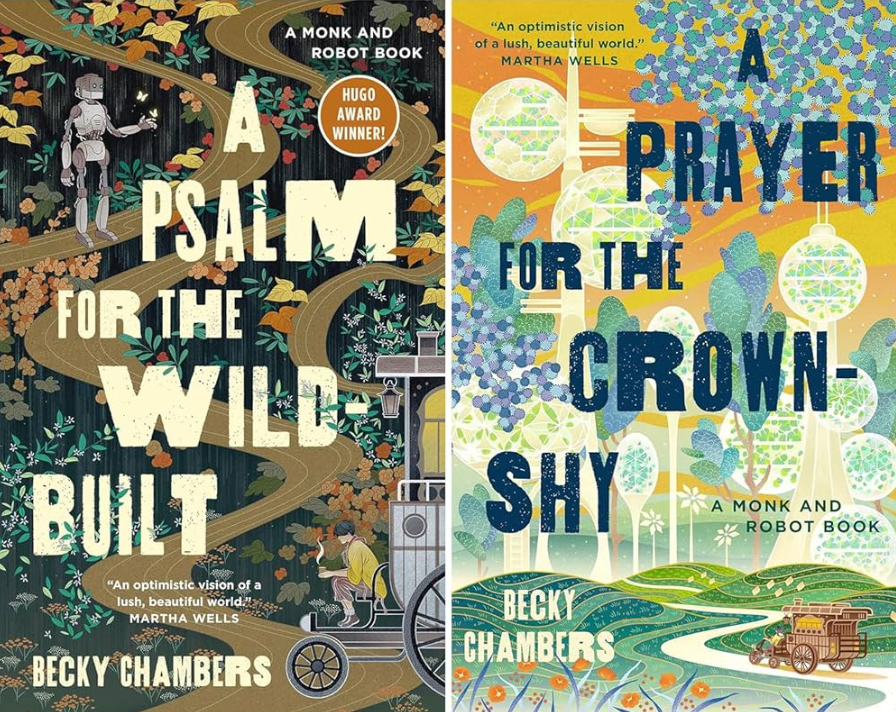
Firstly, I asked one of my friends, Danielle, who is currently in her fourth-year majoring in English and History at King’s College. Some of her favourite video games include Overwatch, Lara Croft games (old and new), The Jedi Survivor and Jedi Fallen Order, Stardew Valley, Stary, and Pokémon.
“I feel like I would love video games based on books, I think they would give a new creative vision to some books out there! I also think that video games are a type of book in themselves,” Danielle says, reflecting on her own experience playing video games as an English student.
The book series she would like to see as a video game adaptation is A Psalm for the Wild Built (2021) and A Prayer for the Crown-Shy (2022), written by Becky Chambers. Danille envisions a game based on the series to be set in a cozy relaxing genre. “I think it would be good to turn it into a game because there are tasks that the main character [Dex] does which would easily translate, like making tea. [In the book series,] They quit their original job to go pursue making tea for people in a utopian earth,” she explains.
Danielle continues, describing how the book series has perfect pacing for adapting into a video game within this cozy genre, resulting in gameplay that encourages the player to relax by completing simple yet satisfying tasks: “Players could make tea for others and listen to their troubles before venturing on with the rest of the plot, and meeting the first robot in 100s of years, breaking the no contact barrier between robots and humans.” Danielle continues, musing about potential gameplay and story features, “Dex still makes tea the whole time, and they have found that [making tea is] part of their calling!”
She then discusses another aspect to the tea-serving game mechanic: giving Dex the option of serving more people in the video game than in the book. Danielle says that this would allow the player to interact with new and diverse characters never-before-seen in the book, thus producing an engaging and lively game mechanic (while still respecting the source material).

During our discussion, Danielle referenced existing games that incorporate books one way or another: “There are a lot of chapter-based reading video games already out there like Habromania (the demo is out); it's based on Alice and Wonderland, but it appears to have its own unique plot so far.” Danielle continues, “I like that they chose an older book with a well-established story so they can really strike out on their own. I feel like if a newer book is chosen, there might be more pressure to conform to the plot.”

She also mentions Child of Light as another of her favorite story-based games. This 2014 game unfolds like a fairytale and is loosely adapted from Sleeping Beauty, while maintaining many unique elements. “The twists and turns are formidable!” Danielle emphasises.
Danielle also notes that it may be hard to do a story-based game with a lot of battle mechanics as, when there are battles in books, they often take place at a very specific time: For this reason, if pure pvp games have lore behind them, it is generally simpler to share these stories in the form of book spin-offs: “For example, Overwatch when it turned into Overwatch 2 added a story mode—and there are plenty of books that offshoot from the overwatch characters that drop more lore—mostly in the form of graphic novels and comic books.”

_____________________________________________________________________
Fablehaven
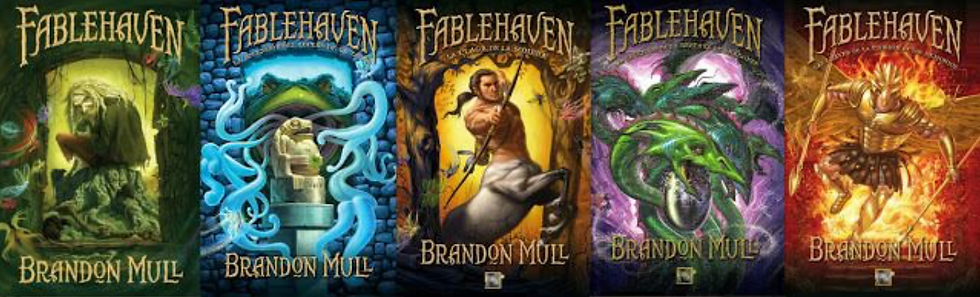
Another of my friends, Tessa, is a video game collector with a side hobby of being a millwright apprentice. Some of the video games they enjoy playing are survival horror and adventure shooter games. “I enjoy the storytelling aspect of both genres—something about Bloodborne scratches that itch,” Tessa explains.

The book series she chose to envision as a video game is Fablehaven by Brandon Mull: “The series already has movie adaptations, but I crave more of the depth that Mr. Mull has [lovingly] crafted into his settings and characters.” Tessa says that the game could incorporate elements from Elden Ring or The Legend of Zelda, such as an open world, an RPG style, and a soul-like genre, allowing the player to discover new lore through exploration.

Tessa notes that “Some of the creatures in the Fablehaven series would 100% destroy anyone who wasn't prepared for it,” and so, potential game designers should “Make it fun (to explore, learn lore, different character builds, ect) but also hard to master (due to the difficulty it is/was to subdue the creatures because of the series).”
In general, Tessa views books becoming video games as a fun idea, mentioning examples of other games that were similarly adapted from a different medium: “I know that some tabletop games have been made into video games (Baldur's Gate & Shadowrun come to mind at the moment, which both are fantastic)!”

_____________________________________________________________________
Shahnahmeh

Lastly, I had to mention one video game I would want to see adapted from a piece of literature. I thought the Shahnahmeh would be a good source material. Written by Ferdowsi, this epic poem originates from Iran sometime between 977 and 1010 CE. Since then, it continues to be significant not only in the place of its origin, but also globally. In short, this epic poem mixes the mythical and historical past of the Persian Empire. Now, since this is an epic poem, there are many stories within the Shahnahmeh, making it somewhat difficult to adapt into a video game. That being said, I believe that it could still be possible if done correctly.

One story in the epic that comes to mind is The Tragedy of Rostam and Sohrab. In short, it is about a hero named Rostam who (unbeknownst to him until it is too late) kills his long-lost son, Sohrab, in a battle between Persia and Turan. The game I am envisioning would have the player go back and forth between Rostam and Sohrab’s perspective, until the two meet at the game’s climax. The ending, of course, would not be a happy one, but, as in the epic poem, the story would demonstrate the consequences of pride, deceit, and lack of communication. The game wouldn’t just contain action, but also moments of exploration and reflection.
The epic poem's age should not pose a barrier to it being adapted into an enjoyable video game (especially since the epic has already influenced many games, films, and shows). Afterall, Journey to the West, a well-known novel based in Chinese mythology and written in 1592, has been re-interpreted in many ways, especially when it comes to the main character Sun Wukong (the Monkey King). In 2024, this novel was adapted into a video game called Black Myth Wukong, demonstrating that many stories from different cultures can be conveyed through the medium of video games. It always makes me happy to see these kinds of stories being told in the gaming industry, and I hope that this kind of storytelling continues.

As for art style, my hypothetical video game adaptation could go in many directions, but it should take inspiration from traditional art forms based from the Shahnahmeh. The game itself could look like a painting (Persian manuscript paintings to be exact), connecting it back to an important part of the epic poem’s historical context.

If this style would be hard to do for a game then another/alternative source of inspiration could be one of my favourite shows, Samurai Jack. From looking at backgrounds in the show (shown below), the art style is characterized by a nice lineless approach that not only looks beautiful but feels fitting for a story like the Shahnahmeh.
Samurai Jack itself is heavily influenced by epic narratives and/or mythologies, while blending modern action, adventure elements into the mix. However the game would look, at the end of the day I would want to see care shown towards its artistry and source material. Again, The Tragedy of Rostam and Sohrab is just one story from the epic, so the possibilities are endless. It all comes down to how the source material translates into a game (which again, goes back to care being at the forefront).
Centring care as a guiding principle to game development would allow the many possibilities of the poem to be utilized properly. The developers could look over the vast amount of stories in the epic to see which other ones could be made into a game, either as multiple parts of a single game or as a larger franchise.

_____________________________________________________________________
Overall, from looking at these hypothetical examples, there is a lot of potential in adapting literature into video games. Just like film and TV, video games are another way for literature to be shared with large audiences, while also making classic stories engaging as interactive and visual experiences. No matter the source material, there are endless possibilities involved in game design. It all comes down to how a game can utilize the source material to create a gaming experience that is compelling enough to stand on its own!



Hi,
Video games are a great way to relax, explore new challenges, and improve your skills while having fun. I especially enjoy racing games because they combine quick reflexes with exciting gameplay. If you're looking for something different to try https://traffic-rider.io/ offers first-person motorcycle racing, challenging traffic, and multiple modes to keep players entertained.
Financial gaming services may include specific requirements that are not immediately obvious from promotional material. When exploring, users should carefully money game review payment methods, withdrawal conditions, transaction fees, verification steps, and spending limits.
Hi,
Book adaptations can give familiar stories a completely different experience when they move into interactive gaming. Players get to explore characters, settings, and challenges rather than simply reading about them. I also enjoy story-focused games that add mini-games and nostalgic characters, such as Doraemon X: https://doraemonxgame.com.co/
It is always beneficial to understand the rules before participating and All Yono Games to play within personal limits. Maintaining responsible gaming habits helps ensure that the platform remains a source of enjoyable entertainment.
AdventureParks challenge energetic families with climbing walls, obstacle courses, and zip lines, delivering safe adrenaline rushes supervised by Discover Dubai attractions trained professionals in well-maintained recreational environments.